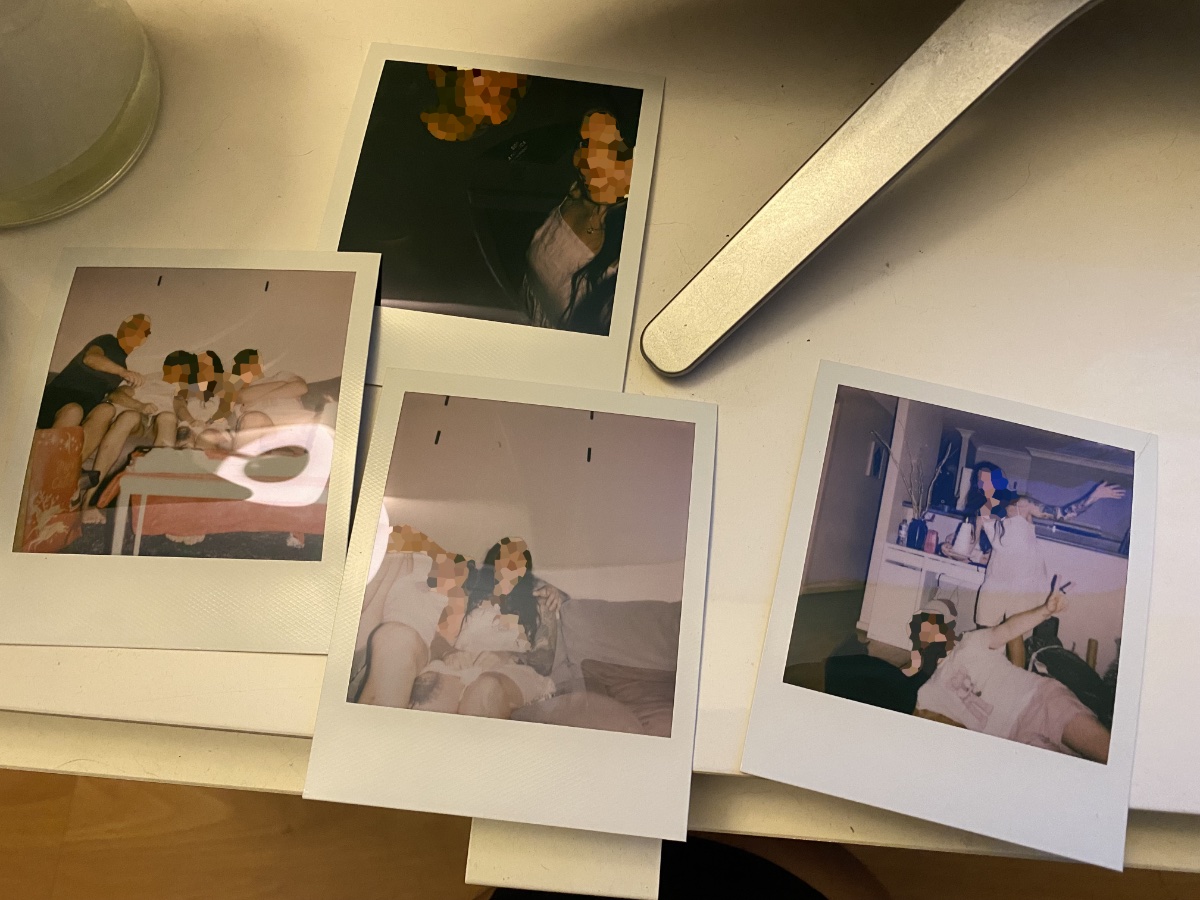
I have a love-hate relationship with my Polaroid camera.
On paper, my Polaroid is the perfect alternative to the point-and-shoot nature of my iPhone. It’s the ideal analog equivalent to digital photos that might as well only exist on your phone, or at most in a post on social media or group chat somewhere. I love that it produces real, physical photos that people can then take home and put somewhere they’ll see it, like on their fridge or wall, to remind themselves of a nice moment in time. The photos have character that you just can’t get when you take a photo with any modern phone, even if they’re not always perfectly in focus, timestamped, geo-tagged, or include a little two-second movie.
But in practice, there are just as many negatives as there are positives to shooting Polaroids, even though the film it uses doesn’t use negatives. Sorry, little film photography pun there.
The film that it does use is expensive, expires if I don’t use it within a certain timeframe, produces sub-standard photos if I don’t store it properly, and the photos produced are so widely inconsistent as to be basically unusable half the time.
When each photo costs you at least $3, it’s not something that you can just snap away with. I’ve been limiting myself to only taking photos of people with my Polaroid for that very reason, because if I’m going to spend that much on physical photos, I want them to be of something real, and not just some nice scenery or whatever.
But because opportunities for nice photos with friends don’t come around all that often, and I’m not taking that many photos when they do, I often find myself with leftover film. Yes, even when each pack is only eight shots, which makes a 36-shot roll of film seem limitless by comparison. I then have to either force people to take more photos to finish off a pack of Polaroids, or contend with storing it and hoping that it will still be good the next time an photos with friends opportunity comes around, then hoping that the film hasn’t expired in the meantime. Improper storage or outright expiration of the film probably isn’t that big of a deal, but with photos being so wildly inconsistent and the photos themselves costing as much as they do, I want to give myself the best possible chance of getting good photos, which is ideally with film that’s within its use-by date and has been stored correctly.
Which brings us to the other part of the problem. I’ve had such varied results shooting Polaroids that there’s always a small part of me that wonders if it’s worth it. I don’t know whether it’s because I don’t have much experience with it to get a good feel for what works and what doesn’t, or because I’m too used to my iPhone camera and its ability to produce perfect photos every, single, time, and keep trying to pull off technically challenging photos with my Polaroid, but getting good photos out of my Polaroid seems like such a coin toss at times that I wonder if there’s anything I can be doing to help my chances of getting photos I would be happy to stick up on my fridge or on my wall.
What’s interesting about all of this is that I don’t have these kinds of inconsistency issues with film. Yes, I’ve shot hundreds more frames of film that I have Polaroids. But with film, I know that when a shot turns out blurry, it’s usually my fault for not nailing the focus using the manual focus lens. Or when the image turns out under or over exposed, it’s because I intentionally wanted it to be. My film rangefinder has automatic metering which prevents the possibility of too dark or too light shots when using aperture priority, but it also doesn’t have the benefit of a flash. By doing away with any kind of adjustable shutter speed or aperture and relying on fixed-focus lenses, theoretically the Polaroid should be able to produce consistent exposures due to how simplified the whole exposure triangle is. But maybe that’s one of its limitations, in that it can only produce exposures in a few limited scenarios, and it over-relies on the flash to compensate for less-than-ideal lighting. Even in the early days of shooting film, when my very first film rangefinder didn’t have (working) metering and I had to manually meter every shot using my phone before dialling my shutter speed and aperture into the camera before taking the shot, I was able to take OK photos most of the time. Yes, in the beginning I might have had a photo that turned out too dark, or too bright, of been blurry due to too slow a shutter speed. But I feel as though I was able to pretty quickly learn what worked and what didn’t and compensate accordingly. The Polaroid, by comparison, seems to have a mind of its own when it comes to exposing correctly. What I think should be exposed correctly isn’t, and what shouldn’t be exposed correctly, is! It’s madness!